
What the design system is
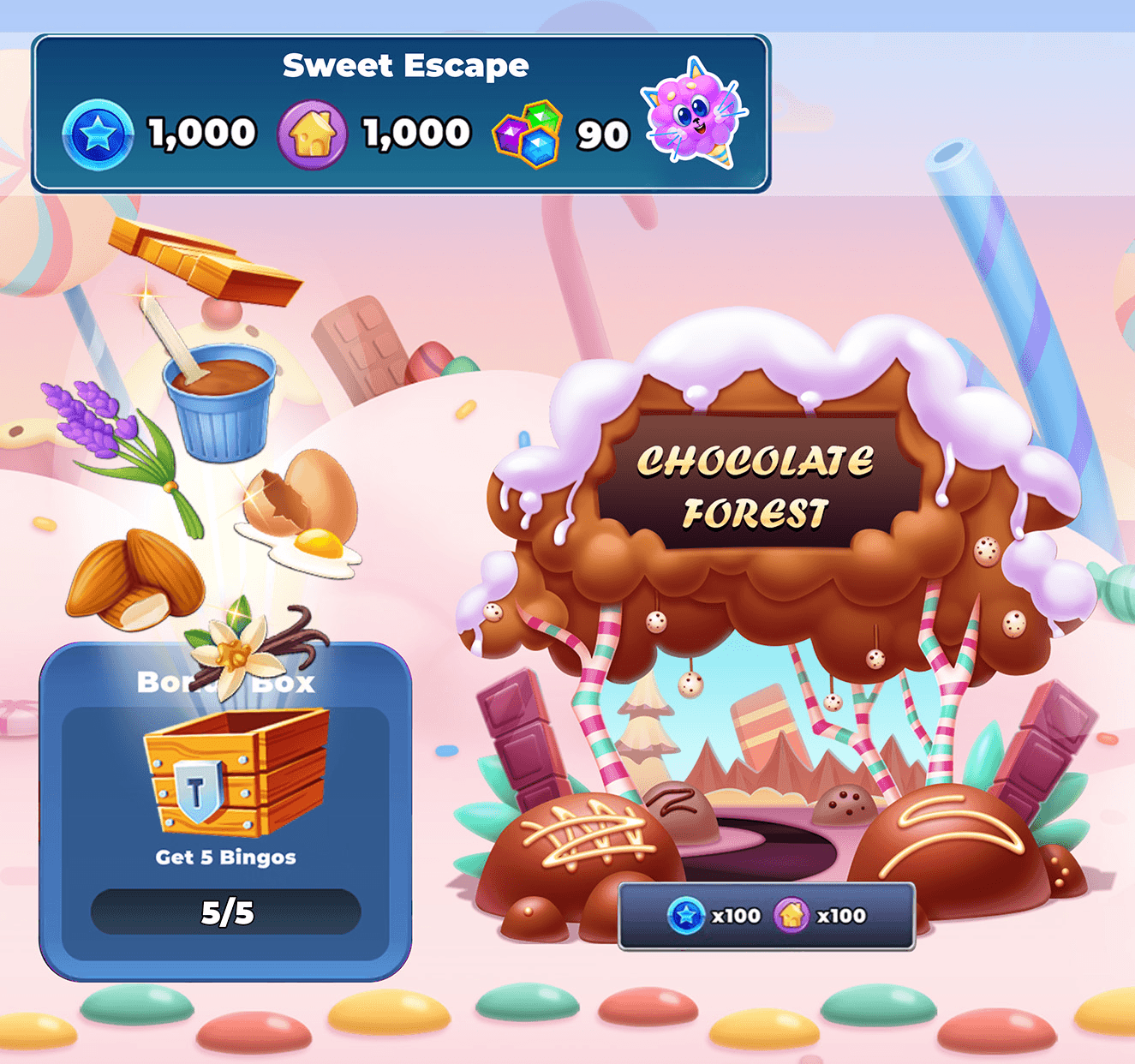
The official description says players win capsules containing special items and use them to craft fantasy decor in seasonal events and ever-changing themed rooms.
The loop
- 1
Play bingo or another reward activity.
- 2
Earn capsules or collection pieces.
- 3
Open or claim the available items.
- 4
Complete a collection or decoration requirement.
- 5
Use the items to advance a themed room.
- 6
Keep playing to unlock further decor or event rewards.
It is not an open-ended design tool. You collect specific pieces and apply them to predefined fantasy rooms or event scenes, and the appeal comes from completing sets and watching a room progress rather than freely placing objects wherever you like. Knowing that up front saves disappointment.
Earning design items
The main source is bingo itself. Completing bingos produces capsules containing special items, and mini-games, events, clubs and trading provide additional materials or help finish a set.
- Check the current room or collection before playing.
- Identify which pieces you still need.
- Keep track of duplicates.
- Save relevant power-ups for event rounds.
- Claim design rewards as soon as they unlock.
- Use club trading to find missing pieces.
- Do not rely on old room guides, because event content rotates.
Check the current event requirements before spending tokens. An event may prioritise particular collection items or reward a specific capsule type, and playing without checking means spending resources on rounds that do not contribute to the room you are trying to finish. Drop rates for capsules and collection pieces are not published anywhere. Treat any claim that a specific item is guaranteed after a fixed number of games as invented unless the game itself is displaying that.
How collection trading works
This is the strongest reason to join a club. Members can trade collection pieces, and the official Clubs FAQ encourages exchanging duplicates so everyone can complete a Club Collection.
A trading routine
- 1
Review your incomplete collection.
- 2
Identify duplicate pieces in your inventory.
- 3
Ask club members whether they have the missing item.
- 4
Offer a duplicate or another acceptable trade.
- 5
Confirm the piece has arrived.
- 6
Check the collection screen and claim the completion reward.
Trading works when people communicate clearly. Use global chat or club messages to name the piece you need and the duplicates you can offer, and avoid promising items that are locked, already traded or unavailable under current event rules. It also makes duplicates valuable. An item useless for your own room may be exactly what someone else needs, so check whether your club has an active collection event before ignoring one.
What clubs are
Teams or alliances of Bingo Story players. A club can hold up to 50 members, and members take part in club events and the weekly Club Tournament. You need to reach level 8 before joining one.
- How active its members are.
- Whether it takes part in weekly events.
- Whether members trade collection pieces.
- Whether it has minimum activity rules.
- Whether it is open, invite-only or closed.
- Whether its communication style suits you.
Those are the things to weigh before joining. Once you have the level, open the main menu, choose Find a Club, and pick from the list. An active club is generally more useful than one with a full roster of inactive players: a smaller group that turns up regularly will help you more than a large one that never completes a shared objective.
Creating your own club
If you would rather lead, you can create a club from the club menu, choosing a name, writing a description and setting the membership permissions.
- Open: Any player can search for and join the club.
- Invite: Players need an invitation to join.
- Closed: Other players cannot join at all.
A good description explains the expected activity level, event participation, trading rules and any minimum requirements. If the club is open, that clarity is what attracts people who will actually participate rather than filling seats. Leaders can promote the club through global chat. The role structure runs Senior Leader, Leader, Senior Member and Member, with leadership permissions covering updating the description, sending club messages and removing certain members. Senior Leaders have broader removal permissions; Leaders can remove up to Senior Member rank. Set expectations early: decide whether inactive members get removed, how trading requests work, and whether the weekly tournament is compulsory.
The weekly Club Tournament
It centres on a shared Club Card. Members call Club Balls on the card, every called ball contributes to club progress, and the goal is to daub the full card and turn it in with the BINGO button.
- Which Club Balls have already been called.
- Who is working on the current card.
- Which collection pieces are duplicated.
- Which pieces are still missing.
- When the club needs more participation before the tournament ends.
Completing the card gives that player a Club Collection Item. Members collect a set of those and turn the completed collection in for Club Points, which improve the club's leaderboard position and its chances at the weekly Crown badge. Coordination is what separates a good club from a full one, and the list above is what is worth talking about. Because the Club Card is shared, finishing one is not just a personal reward: it moves everyone else along too.
Leaving a club
Open the Club Screen, select Members, choose the Info tab and tap Leave Club. The official FAQ warns that leaving costs you the current Club Bingo Card.
Before you go, finish the current card if you can, complete pending trades, and check how close the weekly tournament is to ending. Changing clubs is often the right call if your current group is inactive, but leaving at the wrong moment throws away progress you have already earned.
Playing both systems together
Design and clubs work best in combination. Bingo produces capsules and collection pieces, the rooms give those items a purpose, and clubs help you trade duplicates and finish the difficult sets.
A practical routine
- 1
Check the current design event.
- 2
Play only the bingo modes that contribute to the relevant goal.
- 3
Claim capsules and inspect new collection pieces.
- 4
Mark duplicates for potential club trades.
- 5
Join the weekly Club Tournament.
- 6
Call Club Balls when you can contribute.
- 7
Trade missing items with active members.
- 8
Complete Club Collections before the event ends.
- 9
Avoid leaving your club while a Club Card is in progress.
Do not spend every token immediately. If a design event runs for a while, conserve resources for the days when you have useful free rewards, power-ups or club objectives lined up.
The mistakes that slow people down
New players lose the most ground to a small set of avoidable habits.
- Ignoring the event objective and playing rounds that do not count.
- Joining an inactive club, where trading never happens.
- Leaving a club without checking the current Club Card.
- Spending tokens on every available round rather than the ones that matter.
- Failing to claim the daily rewards at all.
- Discarding duplicates before asking whether a clubmate needs them.
Be cautious too with third-party design hacks, unlimited-token tools and sites claiming to generate collection pieces. None of those are game features, and they put an account or device at risk for nothing. The short version: focus on one current goal rather than chasing every reward at once, spend carefully, and use capsules, events and club exchanges to finish it. Our free tokens guide covers the earning side in more depth.
See the Bingo Story gifts